#RAWTHOUGHTS 2.12.26- Basics for Basics


Charles Hamilton.
A name. Well obviously it's a name. One that used to be a lot more popular and spoken with more positivity in its tone. The term "genius" often followed it and with good reason.
Many times it was uttered as an acknowledgement of a particularly nasty bit of wordplay at the end of a song. As if to say, "of course that was Charles Hamilton". To be fair, if I came up with a line like "That's why I'm Amish to Jay Electronica" I'd just say my name at the end of songs too. Because come on.
The promise held within that name led to it becoming code for a cautionary tale, both of the evils of the music industry and the flawed notion that prodigal talent can overcome anything. Another genius that flamed out too quickly, another broken toy thrown away.
For our purposes today, Charles Hamilton is merely the name that comes to mind as I passed by Rothman's in Union Square while killing time before a show over in Brooklyn. Because for whatever reason my smart dumb ass remembered reading an interview where he said that Interscope sent him here to get new clothes around the time that they signed him and that's my only real frame of reference for the place.
There are other clothing stores around New York that come to mind more readily. You've got your stalwarts like Bloomingdale's or Saks, which seems to be in palliative care as I type this. You have your post-sneakerhead boutiques like CNCPTS or... sigh, KITH. You have more elevated fare like Colbo or Base that specialize in niche Japanese streetwear and sell two hundred and fifty dollar British eau de parfums. You have your single brand shops like NOAH, you have flagship stores like the Ralph Lauren mansion, or local chains like Something Else. But Rothman's has lasted longer than all of them. It will be a hundred years this year. It's great to see an institution stick around.
I stepped in and I could immediately tell it wasn't for me. A lot of... I guess I don't know what to classify these brands as. Stuff like Marine Layer, Faherty, Rag and Bone. Just stuff that costs money but that you couldn't really consider "luxury".
The word that comes to mind immediately, at least to me is "premium". Precisely because it doesn't mean anything. It's at a premium compared to other stuff. Nothing more, nothing less.
The interior designer Jacques Garcia, who did the interiors for Hôtel Costes in Paris and the Grand Hotel de Bordeaux and who did a line for Baker Furniture, said in an interview for Metropolitan Home(yet another magazine that doesn't exist anymore) that luxury "is the simplest thing in the world: it is knowledge. Otherwise it's just money". This quote always comes to mind whenever I see anything described as premium. Or luxury for that matter nowadays.
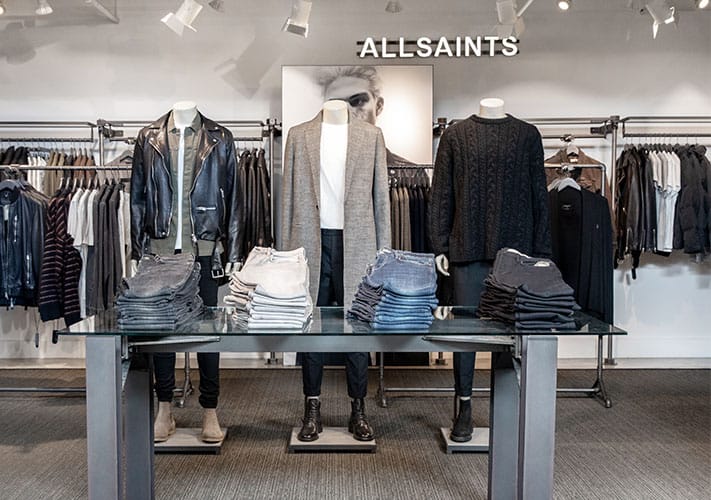
If you went to Bloomingdale's or Neiman or Nordstrom these are the types of brands that would be in a section that they call "The Denim Bar" or some other such nonsense. In context it's either the broke boy section or the cornball section. You might find John Varvatos there, looking for forty something dentists trying to get back something they never had in the first place. If the store carries Barbour, they're going to place it there to give the affair a sheen of credibility. As if to say "Look! Rich English people wear this on manors! All this other stuff is classy, too!" Just demanding to be taken seriously by someone and failing.
You can actually tell just by feeling it. If you look at, say, a flannel from Faherty(that's a tongue twister if I've ever seen one, probably a decent exercise for an acting or vocal class), you would think it's thicker than it actually is. Same with Marine Layer, which barely feels more substantial than something from Uniqlo. Of course, according to their marketing it's "softer" from the get go so that you don't have to wash it a bunch of times to break it in. Which... I guess. Kinda takes the fun out of it in a way, doesn't it?
I'm not sure how that works as surf gear, which is the inspiration for both companies. A lot of surfers famously wore Pendleton flannels due to practicality as the wool kept them warm by the water but not too warm as it was a more breathable fabric. That's actually why a lot of higher end outdoor clothing labels use merino wool for their base layers.
Rag and Bone takes a different tack. They started in 2002 here in New York they lean into that image of "sophisticated urbanite" pretty hard. In their defense, the RB15 was a decent piece of slimmish raw denim back in the day. Not too slim but enough to meet the times. Also they do(or did) offer longer inseams and their branding is rather minimal, which does satisfy my high functioning Cayce Pollard syndrome.
"Lean" and "image" are crucial words here. I can't really say I associate Rag and Bone with sophistication or being urbane or whatever they've aspired towards. They always gave... "I'll begrudgingly take the 6 train even though I'm scared of the subway". There was that old joke of "I won't go above 14th St" back in the day. The Rag and Bone person won't go below 14th.
What irks me about all of these lines is that they kind of don't serve a purpose? Marine Layer and Faherty for all of their surf culture inspirations don't sponsor any surfers. Both were founded by Silicon Valley guys which kind of tracks. Not even because SV is full of swaggerless scammers, possibly the most sauceless people of means we've had thus far, but because of course the Silicon Valley clothing line would be mediocre basics. Basics for basics, if you will.
As I look at a quilted quarter zip sweater in some weird shade of periwinkle? slate? some blueish grey or greyish blue that doesn't look warm, in terms of shade or construction, I think to myself "How the fuck did we arrive at this point?"
In The German Ideology, Marx speaks about the distinction between town and country, specifically the abolition of said distinction. This referred to methods of production and of course the conflict between capital and landed gentry. You can observe the gradual process of this abolition through menswear over time.
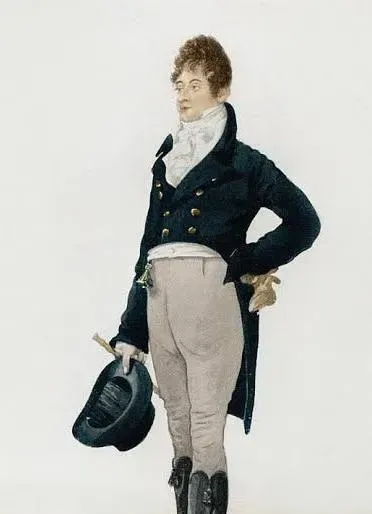
Beau Brummell, known as the first dandy, was credited by some as the face for what later became known as the Great Male Denunciation, where wealthy men of the Western world moved from the flashy aristocratic garb they traditionally wore to more utilitarian garments that focused on fit and cloth quality. If you have as much Internet brain damage as I do(or a similar type anyway) you may remember a terrible Twitter thread where someone blames Beau Brummell for men being scared of color and wearing a lot of blah navy and grey shades. This thread got expanded into an Esquire article that had "BEAU FUCKING BRUMMELL!" as an exclamation at various points. I always read it in the same tone one would read "NORMAN FUCKING ROCKWELL" but that's just me.
Through all of the elder millenial cringe that was expressed in both the thread and the article they got paid by Hearst Communications to write, there were a few key points the author failed to get across:
- This change happened in the wake of the French Revolution and the remaining nobility throughout Europe wanted to be less visible given that a lot of them were, well, decapitated. Seems like basic cost benefit analysis there. Wear more basic clothes that blend in better with the lower classes or die gruesomely. The lower classes were called the "sans culottes". They didn't even have those goofy ass knee breech thingys that people used to wear then. Imagine you and yours were so popped people had to define you by the fact that you wore regular pants. Brummell because of his notoriety was a face of this shift but it was already happening as the circumstances that necessitated it were already there.
- A lot of the shades and fabrics preferred by Brummell and his ilk were country attire. As in clothes that one would wear on an estate. This in itself is a class tell of sorts as it shows that you have land and can maintain it. If you want to you can easily make the argument that it's leisurewear in a way, as it shows that you can leave the city and its turmoil for the earthly comforts of your country home. Also a lot of what is considered men's suiting nowadays has its roots in the military, specifically the officer's corps, which was traditionally a mainstay for landed gentry and nobility and was one of the few true forms of upward mobility available to the burgeoning bourgeoise. Brummell first reached prominence as an officer who somehow got the ear of King George IV which leads to the next crucial point.
- Brummell was an arriviste. He came from a middle class background, made it to Eton, Oxford and the officer's corps. Of course in his efforts to move up in the world he emulated the trends he noticed amongst his peers and tried to perfect them as much as he can as a means of gaining status. Even wearing what are ostensibly his officer clothes are a matter of signifying class, both that he made it as an officer(higher class) and his enthusiasm for showing it off shows he jut got there(middle class). This is time immemorial. You see it today with a lot of menswear weirdos like former Trump advisor Michael Anton, who used to write really pedantic guides about how to wear ties for Styleforum. Obviously he's from a random California exurb of no real significance. Most strict adherents to these types of informal rules tend to be strivers and frauds.

All of this paralleled the growth of the middle classes or bourgeoisie alongside the traditional land-owning classes of Europe. One could argue that capitalism as we know it is in itself a series of sacrifices made by those classes to the bourgeoise in order to retain the basic structure of its class system but right now I'm here to make fun of terrible clothes.
Democratization in menswear became especially prominent in America, which is of course the most middle class country. The ascension of the post war working class and returning GIs from World War 2 made garments such as dungarees, khakis and field jackets fashionable as classic pieces of Americana. A similar phenomenon happened in the 60s happened in England with the mods, with the "hard mods" and early skinheads coming a bit later as the economy started to fall apart. This is at least partially responsible for the concept of "high and low" in fashion, especially during the beginnings of economic collapse in the West during the 70s and 80s. There were dope boys in Harlem wearing Gucci tennis shoes with Lee jeans, auto workers in Detroit wearing Cartier glasses(buffs for the buffalo horn they were made of). Strange and interesting mixtures of function and luxury abound.
As America shifted toward being primarily a service economy held up by nebulous office jobs and tech scams, this democratization took a weird turn. This is what is known as business casual.
It started with a guide made by Levi Strauss and Co in the 80s, a lookbook sent to various large corporations detailing the best ways to wear Levi's jeans and Dockers khakis. I wonder what their objective was.
From dress shirts and khakis and dark denim we move to the world of performance fabrics and weird glossy polos with sweat wicking technology and fleece vests and hybrid exercise khakis from Lululemon.
In this realm there are three items that bear the brunt of my ire and they were showcased quite prominently during my sojourn to Rothman's: the quarter zip sweater, the five pocket trouser and the dress sneaker.
This is where America's fetishization of the middle class comes into play. By definition the middle class in all of its variations is insecure. They have more money and more access to actual capital than what remains of the working class but there's still a layer of real wealth hanging above them like the sword of Damocles, waiting to strike whenever the markets have a downturn. This position, where you're afraid to lose everything and fall into the abyss known as poverty, leads to cowardice as a virtue. In its most extreme form this cowardice leads to revanchism, most recently seen in the form of Trumps's non-consecutive terms.
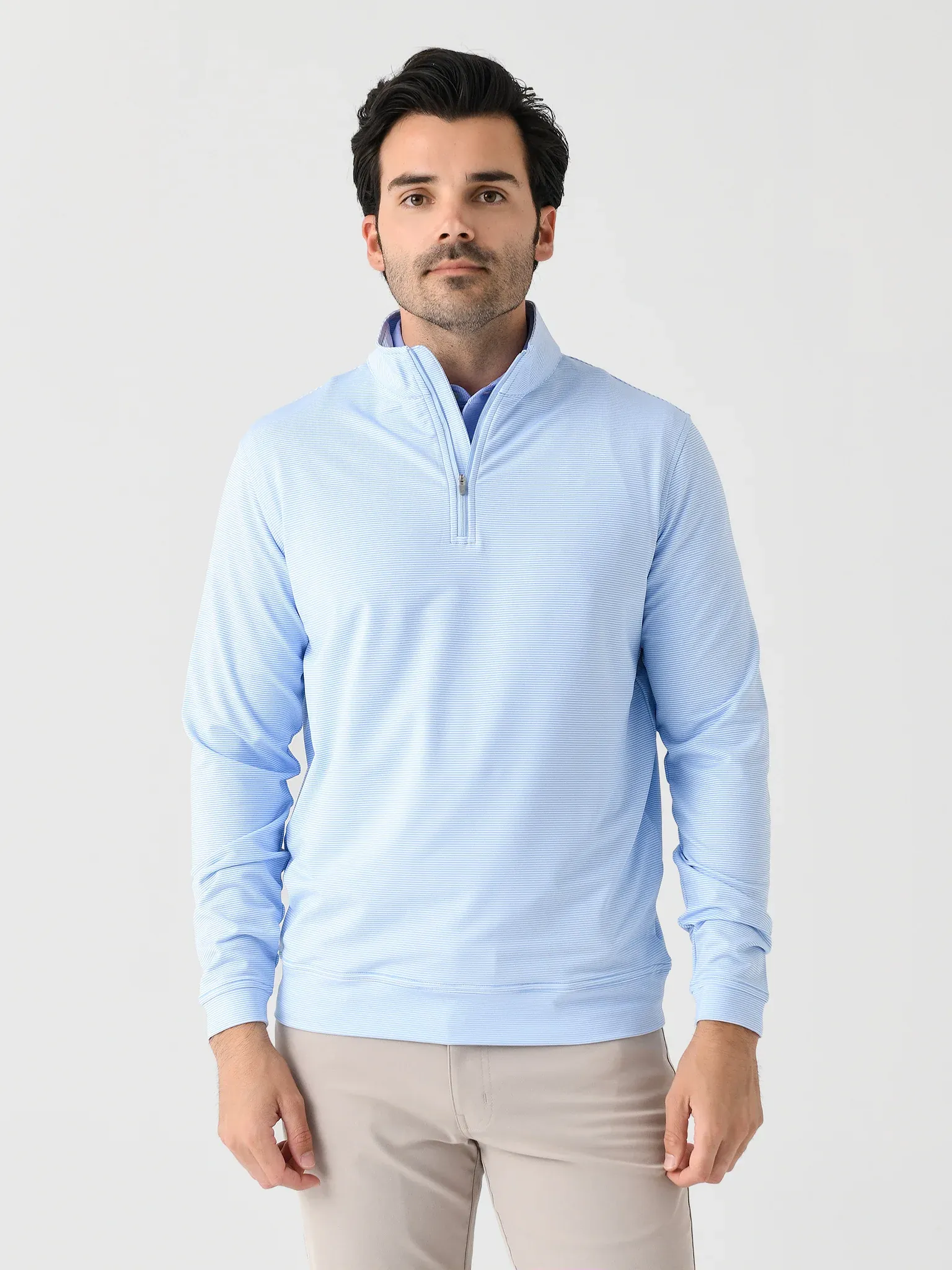
On a day-to-day level you see it in the quarter zip sweater. A truly cowardly piece of clothing. A sweater that in theory does keep your neck warm yet doesn't have the balls to be a proper turtleneck, thus saving its wearer from ridicule. Too casual to wear with a suit but too formal to pull off with jeans or dungarees or any type of pants that might actually be interesting. If you wear it zipped down, which you probably will as no one actually zips it up, rendering the zipper superfluous, you can reassure people that you are in fact wearing a tie. Crisis averted!
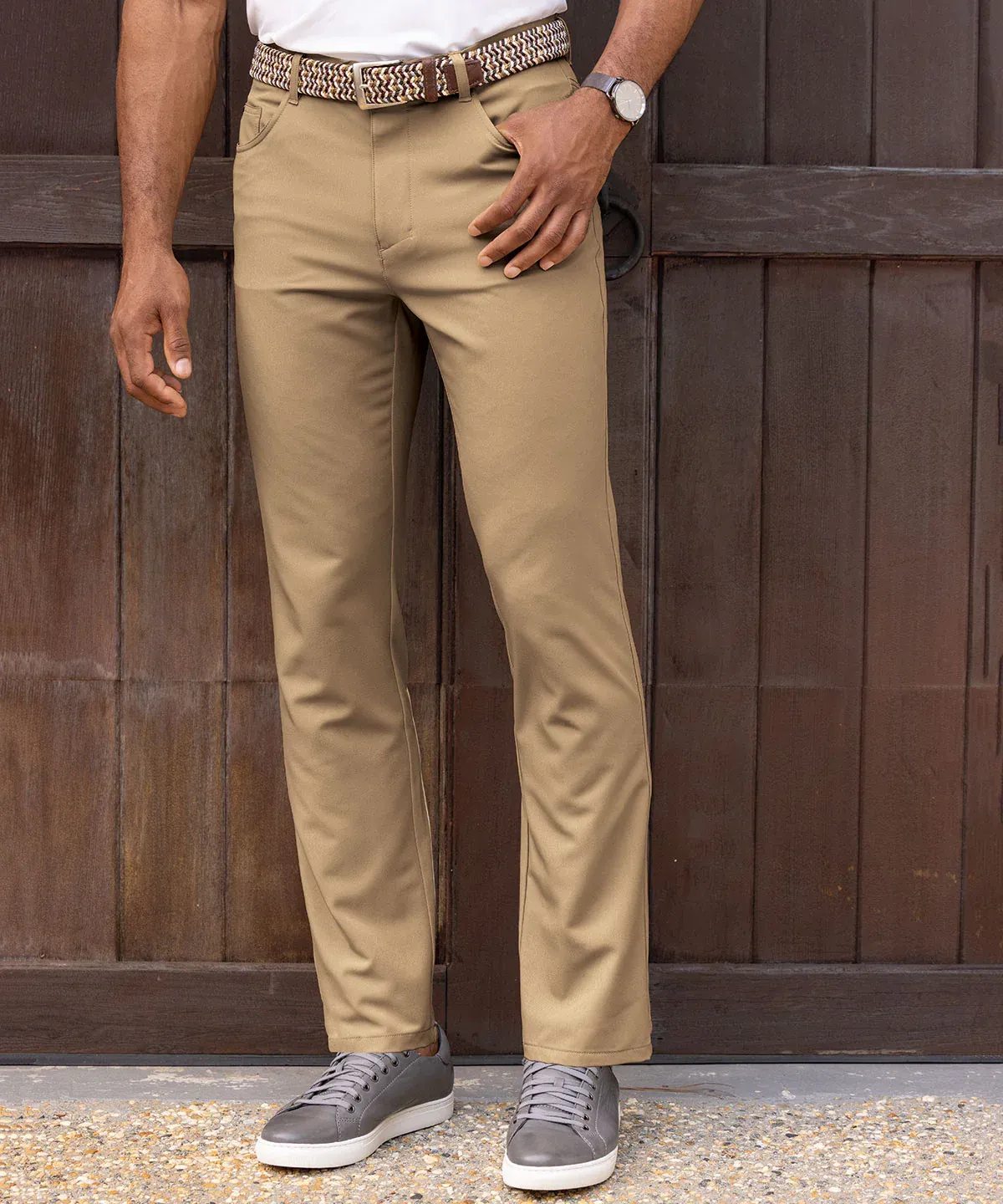
This is often worn with the five pocket trouser. Or five pocket khakis. I don't know what the fuck those things are called. I hate them. I don't know who thought "What if we had jeans but they were in khaki colors with khaki texture" but they obviously weren't a serious person. Either wear one or the other. Jeans and khakis were designed as functional garments with those specific fabrics for a reason. Hell, the whole point of khakis is that you can wear them both in a business and a casual context! Making more casual khakis is completely pointless! And both come in a variety of fits and silhouettes, not that weird slim highwater cut that those companies haven't moved on from. Half of these come in strange performance twills which... what are you doing in an office that presumably has air conditioning that has you sweating out of your ass so much?
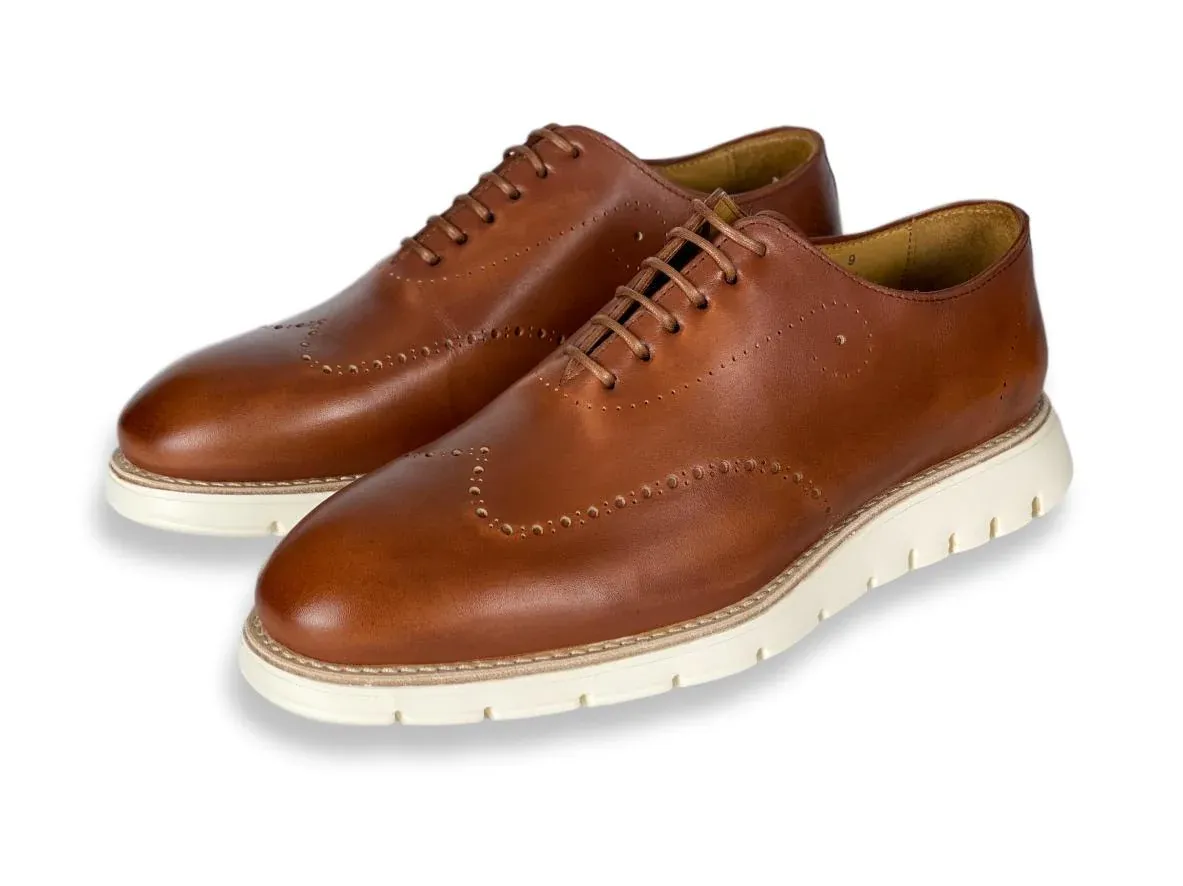
As mentioned previously many of these pants are highwaters, the hems(never cuffed, unlike proper jeans or khakis I've never seen them cuffed) often sitting three or four inches away from a pair of dress sneakers. Nasty work, those. Tennis shoe soles with a brogue on top. Just... why? You could probably get a comfortable pair of actual dress shoes for that amount of money. Or just buy some Stan Smiths or something if you need a minimalist sneaker that's bare enough to be passable in an office. Why are you wearing church shoes with an Air Max unit? Everything about that shit is incongruent to me. How are you an adult and you're complaining that the shoes at your job that doesn't even require that much standing or walking aren't comfortable enough? I don't understand how you make a six figure salary and you haven't either found a good pair of oxfords or done the thing that so many finance people do where they wear running shoes on their commute and keep their work shoes at the office. This is a reasonable and workable solution that leaves you with two worthwhile pairs of shoes instead of one useless one. If you're buying something specifically for work then why wouldn't you- forget it.
All of these are linked in that they exist in sort of a liminal state where by attempting to bridge a gap between formal and casual, they fail at existing in either category. If you wear any of these in either context they just look off because they don't really serve any purpose outside of its own existence, a solution in search of a problem. Yet I see these everyday.
This is emblematic of middle class existence across all of its income brackets. Sort of a relaxed conformity you must endure. You can be comfortable here but only under these parameters. It may not even be strictly enforced by a dress code but there is a group think that infers that you can't really stand out by going too far in one direction. Hence a sea of fleece vests in every business district in America.
Purposelessness binds these garments to their wearer's profession. Lawyers, for instance, have to present themselves as respectable and knowledgeable in front of a jury so their profession deems that they wear a suit. I mentioned the stupid fleece Patagonia vests in the paragraph above but a lot of financial firms still require a business suit for dealing with important clients or regulators. It might not be fair but I wouldn't think you're on the level if you're presenting a case in a Tech suit. Or a quarter zip for that matter. Yet the tech jobs and so many other nebulous white collar professional positions, those are the ones where you're backed into wearing paradoxical clothes. An implicit recognition that these are, to quote the late David Graeber, "bullshit jobs".
Clothing in general lately seems to have been divorced from any type of context, which is how we got here in the first place. The late 2000s bred a sort of otaku-like modern dandyism through places like Styleforum, Superfuture and niche sectors of Tumblr. This was known both winkingly and derisively as #menswear.
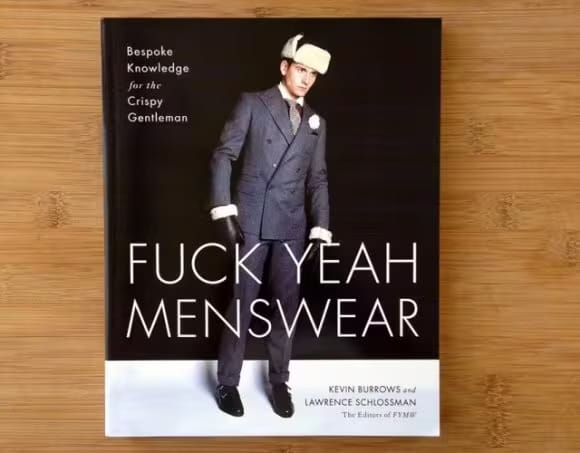
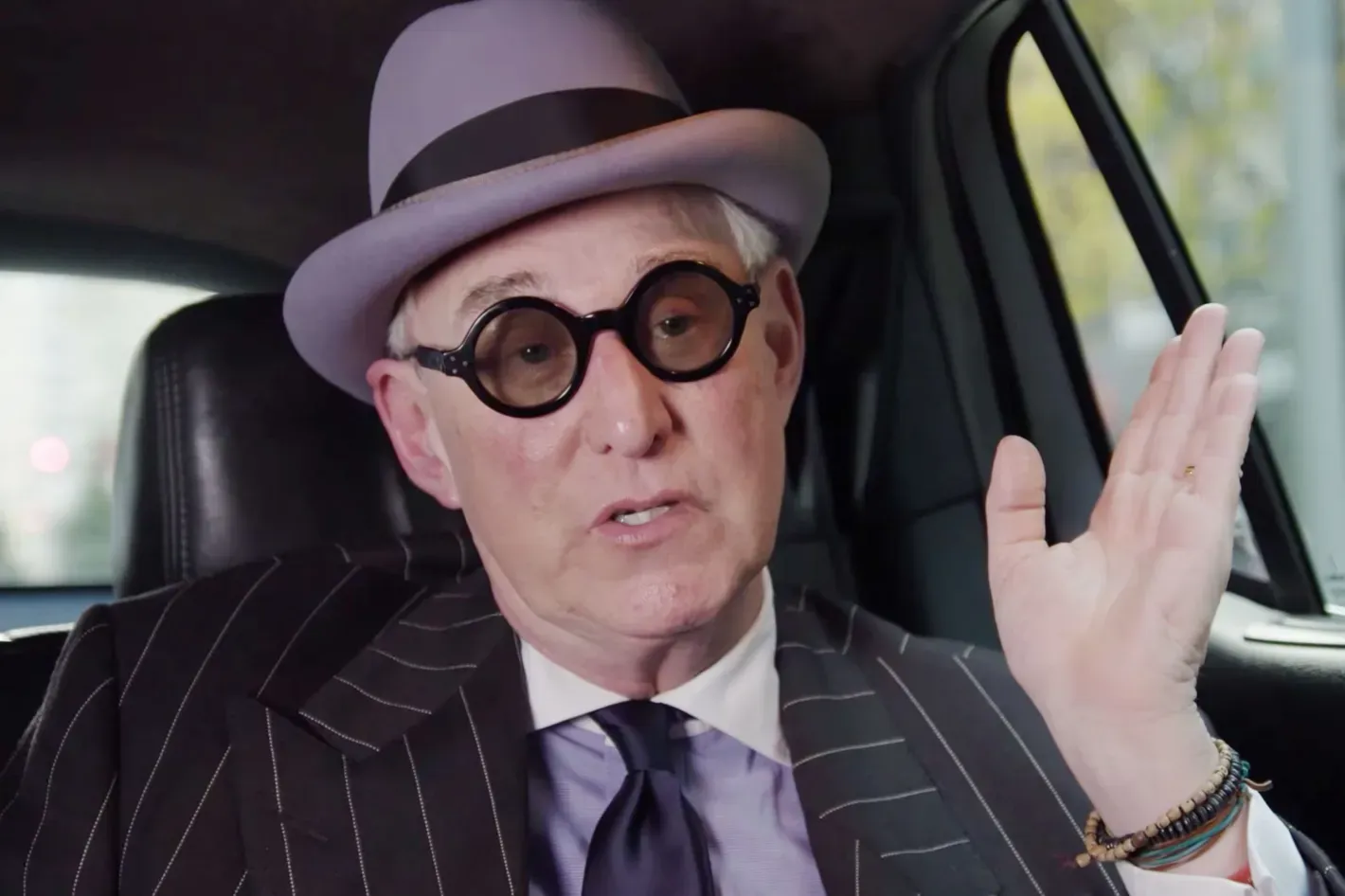
Some of the more daring enthusiasts, like Lawrence Schlosssman, formerly of How To Talk To Girls at Parties and Fuck Yeah #Menswear and now of Throwing Fits, moved on from Neapolitan tailoring and Gant Rugger to Raf Simons or Kapital or whatever was down the pike. The more staid(in comparison), such as Christian Chensvold of Ivy Style, leaned into the inherent conservatism that stems from being that fixated on rules of classic tailoring. To be fair when you interview Roger Stone twice, what other conclusion can you make? Not to mention prominent posters linking to AlternativeRight in your comment section. Either way the whole thing reeked of real life cosplay.
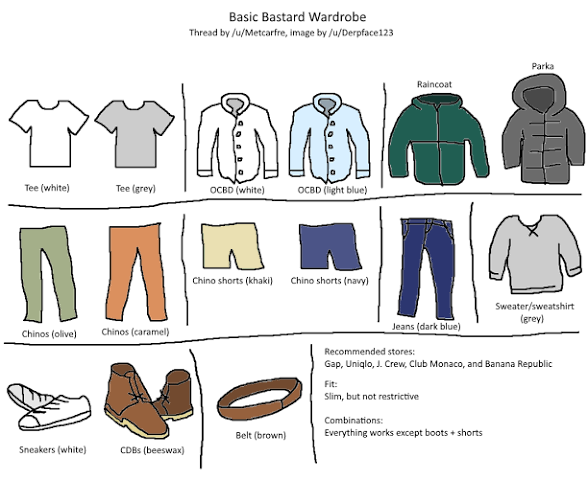
Beyond that was the notion of the "basic bastard", the much maligned style guide created by the notorious subreddit mensfashionadvice. Given that it was an advice board, many of the redditors who came there didn't know shit about how to dress and were looking for a basic set of guidelines for how to be taken seriously. In essence a more thought out version of whatever impulse led the stereotypical(probably a bit unfairly)2011 redditor to wear a fedora with outfits that couldn't possibly call for it. If I remember correctly, the original guide called for slim fit dark jeans, a white oxford, desert boots, maybe a grey sweatshirt. Just basic clothes for basic bastards so that they don't scare the hoes off rip.
These were supposed to be a building block for a functional wardrobe. To their credit many men who were looking to find a sense of personal style did end up doing so with that foundation. However a lot of them did just take these guidelines as hard set rules so that they didn't have to think. Hence the insistence that certain fits or styles were "timeless". More of a fixation on efficiency than style.
This is what binds all of these together. The quest for making the correct choice so that you can focus on productivity and making money that you will spend on more correct things that you don't have to worry about lest they get in the way of productivity. Just more middle class pathological nonsense.
It's sad how much historical context is lost in this quest. Right now I'm wearing a Uniqlo oxford shirt(that I wish wasn't slim fit but there was a deal going on at the time). It's serviceable for the most part, a dependable shirt. But when I look at the collars I see the buttons that were put there to keep them from moving about during polo games. When I take it off I'm probably going to grab it by the loop on the back that was first introduced by Gant as a practical measure so that Yalies could hang it off of the hook in their respective lockers.
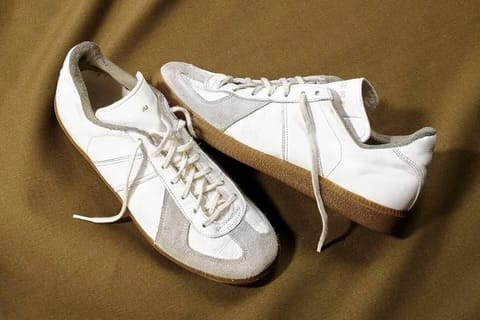
When more snow is cleared out I'll probably wear my Adidas BW Army's. These are a version of another MFA standby that was probably taken from Superfuture: the German Army Trainer(or Bundeswehr hence BW). In the 70s and 80s adidas got the contract to do basic sneakers for the West German army and throughout the 90s a bunch of them made their way to surplus stores all over Europe. This became the inspiration for the Margiela Replica sneaker. Around this time, the GAT silhouette became known amongst the Basic Bastard crowd as a good clean white sneaker. Of course there were only a finite amount circulating around the vintage stores of Berlin and Paris. adidas did semi-limited runs(I managed to get a pair from Nordstrom's site and they mercifully fit) that sold out fairly quickly but demand was there so direct-to-consumer firms like Beckett Simonon and Oliver Cabell stepped in to fill demand.
Personally I never really cared for these type of, well, Reddit companies. They always seemed kind of hollow if that makes sense.
Okay so you fall in love with a specific item, like the Bundeswehr Trainer. You know it has these specific traits that stick out to you, that low cut, the grey suede trim, that gum sole. It looks so good with every outfit you put together in your head. Even if it gets beat up a bit the dishevelment is so artistic it's almost worth it. You go on eBay and you see if there's any in your size. You learn the intricacies of EU sizes vs UK vs US. You realize how hard it is to come by in your size. You don't have Margiela money so that doesn't even factor in. Margielas aren't even real to you. adidas is sold out and there's no indication that they'll ever do another run. So you buy a DTC shoe that's a bit more than the adidas or surplus ones would have been but is accessible. This is accessible and has just enough similarity to what you really want.
At first you're happy with the Samuel Beckett Ones. It has the low cut, the grey trim, that gum colored sole that provides crucial contrast. Leather quality seems decent. On a superficial level, this has many of the qualities you liked about the GAT. But something feels off even if you can't find the words for it.
A pair of BW Army trainers, like any iconic piece of clothing, has the weight of the cumulative history of its wearers behind it. You imagine broke college students or artists in Munich or Brussels or Rotterdam getting these for cheap, managing to pull together a decent outfit with what little they can. You see those artists or whoever in their studios or going to openings in those, ashing spliffs or spilling cheap wine on them, living in them. Martin Margiela was one of them, which is why he made a hyperreal idealized version of them in the first place.
The Simon Says lows are a reproduction of a reproduction. Pure simulacrum. That history isn't there. Compared to the Margiela Replicas they're good for the money. That's just it though. The originals, they're cheap enough relatively speaking that you can really make them yours, thrash them about, live in them. Ironically the same goes for the Replicas. They're so expensive that you might as well get your money's worth and wear the shit out of them. If anyone says anything, it's Margiela! The Becky Lynch 5s though... they're not even a real athletic shoe or a real luxury production of one. You can wear them in the office I guess?
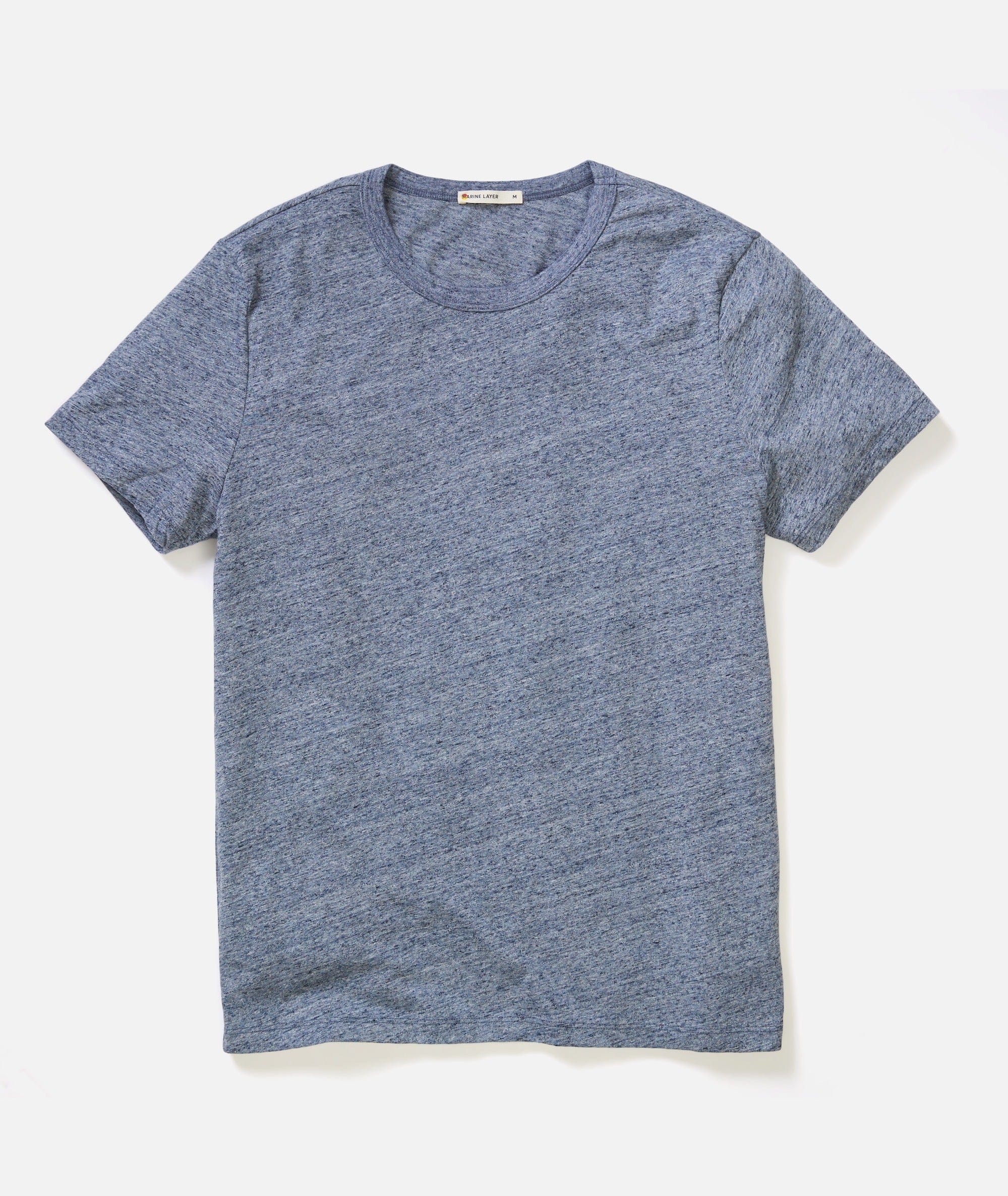
According to their site, Marine Layer was started because the founder's ex stole his favorite t shirt and he wanted to make something that felt as soft. He even formulated a special cotton and wood pulp blend that was meant to provide both softness and durability(many Reddit reviews say otherwise on the latter). That's kind of missing the forest for the trees isn't it?
If something is your favorite anything it's because it's imbued with memories and has your essence tied to it. You wore these jeans at this show and that's where you met the love of your life. You wore this hat when the Knicks made it to the finals(God willing). They wore in or softened because they shifted and changed along with you. You can't recreate that.
There's just always something bleak to me about these prechewed clothes, whether it's designer denim with gaudy washes or t shirts that claim to be as soft as my favorite. They leave us with nothing and try to sell falsehoods to us as nostalgia.
Charles Hamilton.